Health & Safety Requirements for Commercial Moroccan Hammams
Health & Safety Requirements for Commercial Moroccan Bath Spa Safety
Moroccan hammams have been an integral part of wellness culture for over a thousand years, blending ritual bathing with social ceremony. Today, commercial Moroccan hammam spas are thriving globally — from boutique studios in Dubai and London to resort facilities in Marrakech and New York. But with growing popularity comes a critical responsibility: ensuring that every client who enters your doors is safe, protected, and cared for.
This comprehensive guide covers all health and safety requirements for operating a commercial Moroccan hammam, with a special focus on moroccan bath spa safety standards, regulatory compliance, and best practices that protect both customers and staff.
What Is a Commercial Moroccan Hammam?
A commercial Moroccan hammam is a professionally operated wet spa facility that replicates the traditional Moroccan bathing ritual. Unlike a standard sauna or steam room, a hammam typically involves:
- A series of heated chambers at varying temperatures
- Application of Kessa (exfoliating mitt) and black soap (beldi)
- Ghassoul clay masks and argan oil treatments
- Professional therapist-assisted scrub and massage services
- Marble or tiled surfaces designed for wet treatment
Because treatments are hands-on, surfaces are perpetually wet, and temperatures are elevated, Moroccan hammam environments present unique health and safety challenges that require specific regulatory attention.
Why Moroccan Bath Spa Safety Is Non-Negotiable
Moroccan bath spa safety is not merely a legal checkbox — it is the foundation of client trust and business sustainability. Lapses in safety protocols can lead to:
- Slip and fall accidents on wet marble or tiled surfaces
- Heat-related illness including dehydration, heat exhaustion, or heat stroke
- Skin infections from improperly sanitised tools or linens
- Respiratory problems from poorly ventilated steam rooms
- Allergic reactions from undisclosed product ingredients
- Liability lawsuits that can permanently damage a business
Regulatory bodies in most countries classify commercial hammam spas under wet spa or hydrotherapy facility categories, each with their own licensing, inspection, and compliance requirements.
Facility Design & Structural Safety Requirements
1. Flooring and Surface Standards
Every commercial Moroccan hammam must comply with anti-slip surface requirements. Local building codes typically mandate a minimum slip-resistance rating (commonly R11 or R12 on the DIN 51130 scale) for wet areas. Key requirements include:
- Anti-slip tiles rated for wet spa environments throughout all wet zones
- Proper drainage gradients (typically 1.5% to 2% slope toward drains)
- No sharp edges, broken tiles, or cracked surfaces
- Non-porous grout to prevent bacterial and mould growth
- Contrasting edge markings on steps and level changes
2. Ventilation and Air Quality
Steam-heavy environments require precision ventilation to maintain air quality and prevent mould. Compliance standards typically require:
- Mechanical ventilation systems capable of achieving 6–10 air changes per hour in steam rooms
- CO2 monitoring in enclosed treatment rooms
- Humidity extraction to prevent structural condensation damage
- Regular HVAC filter maintenance with documented service logs
3. Temperature Regulation
Moroccan hammam rooms traditionally progress from warm (35–40°C) to hot (45–55°C) chambers. Safe commercial operation requires:
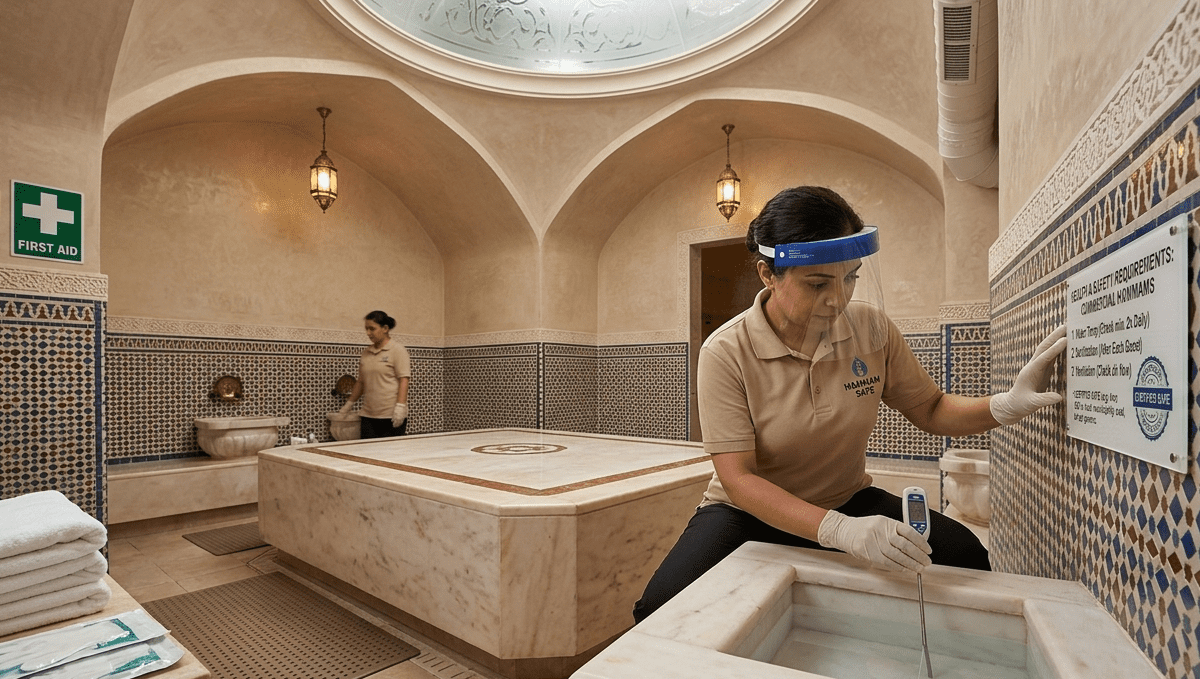
- Digital temperature controls with automatic safety cut-offs at maximum thresholds
- Thermometers visible to clients inside each chamber
- Emergency cool-down stations or cold water facilities adjacent to hot rooms
- Regular calibration of temperature control equipment — typically every 6 months
Hygiene & Sanitation Standards for Moroccan Hammams
Hygiene is the most scrutinised element of moroccan bath spa safety by both health authorities and clients. The following protocols are typically required or strongly recommended:
Linen and Tool Management
- Single-use Kessa mitts per client — never reuse exfoliating gloves between customers
- Fresh, clean towels and robes for every client — laundered at minimum 60°C
- Black soap and Ghassoul products must be dispensed from sealed containers, not shared bowls
- Argan oil and cosmetic products must comply with local cosmetics safety regulations
- All reusable tools (if any) must be sanitised using EPA- or EU-approved disinfectants
Surface and Room Cleaning Protocols
- Full surface disinfection of all treatment rooms between each client session
- Daily deep cleaning of all communal areas including steam generators and drainage
- Weekly inspection and cleaning of steam nozzles to prevent Legionella risk
- Monthly water testing for pH, bacterial load, and mineral content
- Documented cleaning logs signed by the responsible staff member
Legionella Risk Management
This is a critical but often overlooked component of moroccan bath spa safety. Steam-generating equipment and water systems in hammam facilities are categorised as high-risk for Legionella bacteria. Requirements include:
- Formal Legionella Risk Assessment (LRA) conducted by a qualified assessor
- Written Water Safety Plan (WSP) reviewed annually
- Water temperature checks: Cold water below 20°C and hot water above 60°C at point of storage
- Monthly microbiological water sampling in steam systems
- Staff training on Legionella awareness and emergency response
Staff Health, Training & Safety Requirements
Mandatory Staff Qualifications
Anyone providing treatments in a commercial Moroccan hammam must hold appropriate qualifications. Depending on your jurisdiction, this may include:
- NVQ Level 3 or equivalent in Body Massage or Spa Therapy (UK)
- Cosmetology or Esthetics License (US — requirements vary by state)
- Therapist certification recognised by local health authorities (UAE, EU, etc.)
- Manual Handling training — essential given the physical nature of Kessa scrub techniques
- First Aid and CPR certification — at least one certified staff member on duty at all times
Personal Protective Equipment (PPE)
Hammam therapists work in hot, humid environments with chemical products. PPE requirements include:
- Non-slip footwear with closed toes in all wet areas
- Waterproof aprons during scrub and clay treatments
- Disposable gloves when handling cleaning chemicals
- Adequate hydration breaks — staff should have access to water every 30 minutes in heated environments
Staff Health Surveillance
- Pre-employment health screening for skin conditions and respiratory issues
- Regular occupational health reviews for staff working in high-heat environments
- Clear policy: staff with active skin infections, colds, or communicable conditions must not work in treatment rooms
Insurance Requirements for Moroccan Hammam Spas
Moroccan bath spa safety extends to financial protection. No commercial hammam should operate without the following minimum insurance coverage:
- Public Liability Insurance — minimum £5 million / $5 million / AED 18 million depending on jurisdiction
- Professional Indemnity Insurance covering all therapists and treatments offered
- Employer’s Liability Insurance (legally required in UK and many other countries)
- Product Liability Insurance for all hammam products sold or applied on-premises
- Property and Business Interruption Insurance
What are the main health risks of a Moroccan hammam?
The primary risks include heat-related illness (dehydration, heat exhaustion), slip and fall accidents on wet surfaces, skin infections from unsanitary tools or linens, Legionella bacteria in water systems, and allergic reactions to hammam products such as argan oil or black soap. Proper moroccan bath spa safety protocols significantly mitigate all of these risks.
Is a commercial Moroccan hammam regulated differently from a standard spa?
Yes. Because hammams involve high temperatures, steam, and hands-on exfoliation treatments, they often fall under specific “wet spa” or “hydrotherapy” regulatory categories that require additional licensing, Legionella risk assessments, and enhanced hygiene standards compared to a typical day spa.
Do hammam therapists need specific qualifications?
Yes. Depending on the country, therapists must hold relevant beauty therapy, massage, or esthetics qualifications. First Aid certification is also typically required for at least one duty